 TICKETS
 DONATE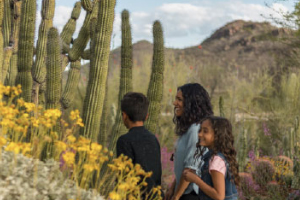



Research and Conservation
Since the Desert Museum opened its doors, it has worked to understand, connect people to and protect the natural systems of the Sonoran Desert Region. The Sonoran Desert has one of the greatest varieties of plants and animals of any desert worldwide. It is the only place in the world where you can find the majestic saguaro cactus! Its varied geography and bi-seasonal rainfall support a surprising variety of mammals, birds, reptiles, amphibians and arthropods as well. For thousands of years, this desert has nurtured human cultures that lived in relative harmony with this landscape.
The Museum's conservation activities have been widely recognized for many decades. To quote Stewart Udall (2009):
"The Desert Museum has left an environmental legacy through its educational exhibits and conservation programs. Its long history of fighting to protect the Sonoran Desert Region includes key roles in campaigns such as those that helped the National Park Service establish Ironwood Forest National Monument and that helped create a plan to preserve the Isla Rasa island reserve in Mexico. The Museum played key roles in the protection of coastal wetland in the Sea of Cortez, as well as of large tracts of rare Tropical Deciduous Forest in southern Sonora. Recently it has led public campaigns for sustainable seafoods and for combating the devastating effects of the exotic, introduced buffelgrass that is threatening the future of the entire Southwest."