 TICKETS
 DONATE


Program Report
Over the past year the Museum has continued to develop program content, on-grounds exhibits and animal habitats, as well as our public facilities. This has been accomplished through a comprehensive planning initiative which includes the creation of several Board-level working councils/committees, and greater engagement of Collections staff in the visitor experience and revenue generation, which has enhanced a variety of unique programs, such as Live and (sort of) on the Loose, and Running Wild. We have also seen an increase in a variety of new revenue-producing public tours facilitated by both our staff and docents. Outside audits and accreditations have continued to yield outstanding results.
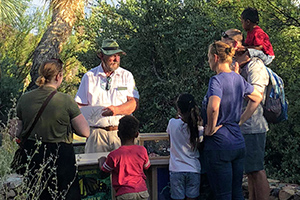
The Art Institute, the Desert Ark, Earth Camp, the Digital Library and the dynamic ASDM Press were further developed and have grown in various ways — all through generous gifts and support from private individuals and foundations, and/or significant grants. The Interpretive Docent program continued to grow even stronger, with docent educational opportunities and training becoming more extensive. In 2010 we had the largest group of trainees enroll for the Docent program in the history of the Museum.
Several exhibits opened, or were renovated, including Ancient Arizona, the black bear exhibit, Life on the Rocks, Life and Death in a Cave, and People & Pollinators. Extensive new facilities were constructed and/or improved, ranging from the Baldwin Education Building and the Warden Oasis Theater to aquatic animal holding. Others were renovated and expanded, such as our on-grounds Veterinary Clinic and the Mammology and Ornithology Building, including large carnivore holding and retirement.
The Museum has had many successes in research and conservation this past year, such as program enhancements to our sustainable seafood program, continued development or our Macrofauna Golfo database, further integration of the Center for Sonoran Desert Studies, background research and technical advice supporting the Ironwood Forest National Monument, working with non-profits in Mexico to initiate and establish conservation projects such as Rancho Ecologico Monte Mojino (a non-profit organization protecting 10,000 acres of endangered tropical dry forest in Mexico), and working in partnership with community leaders such as Ms. Sarah Smallhouse and Dr. Julio Betancourt, to assist their efforts in the founding of the Southern Arizona Buffelgrass Coordination Center.
The Museum continues to play asignificant role in our region in the area of rare species management and recovery, including many species of desert fishes, Chiricahua leopard frog, Tarahumara frog reintroduction, Mexican garter snake, and the Sonoyta mud turtle.