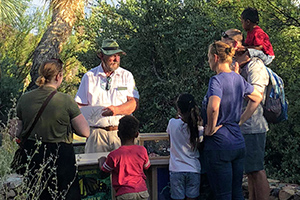
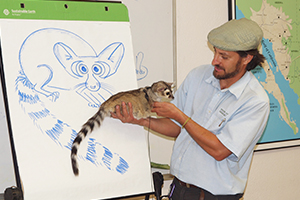
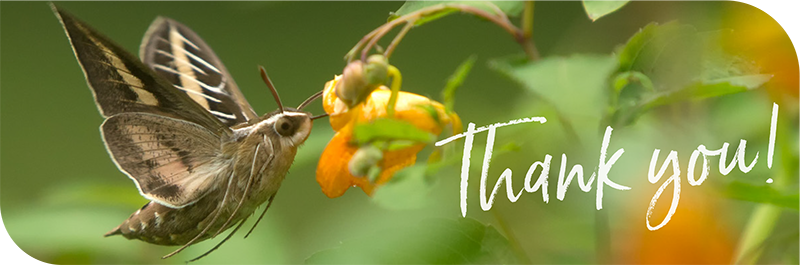
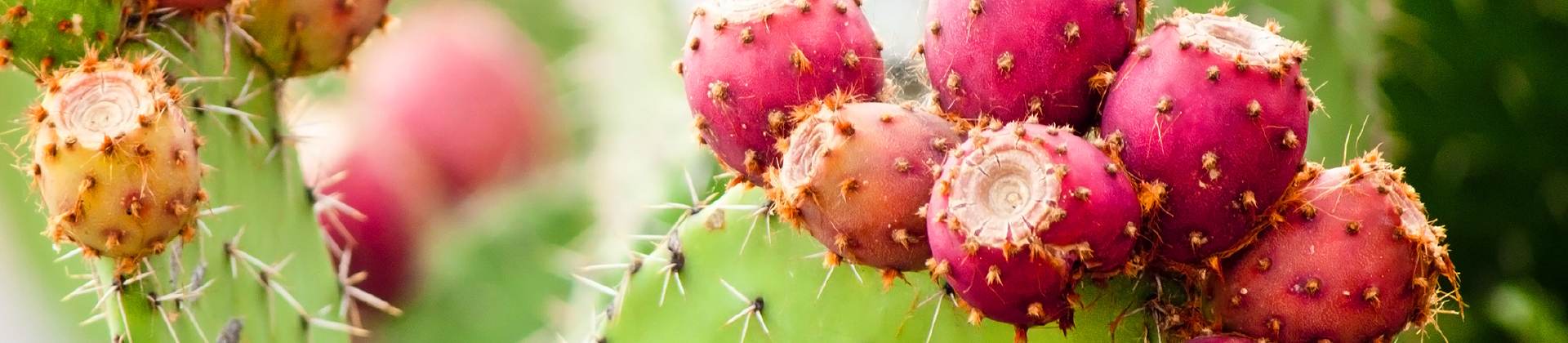
October 2008 Dear Member and Friend, It's going to be a hot one today...better get an ice pack for the tortoise carrier. I enter the Interpretive Animal Collection (IAC) and am greeted by friendly staff, volunteers, and a keening kestrel. I sign out the animals I will need - ringtail, kangaroo rat, and tortoise - then gather up the ice pack and critter treats, load them into the Desert Ark, and head out. Today's destination is Woods Memorial Public Library. They have requested our "Plant and Animal Partners" program for their family story time. This program presents the plant/animal partnership of pollination and seed dispersal through dress up, puppets, and live animal demonstrations. I start by selecting two audience volunteers and asking them, "What is your favorite fruit?" I turn them into "watermelon flowers," explaining floral anatomy and pollination in the simplest terms as I place a "girl part" with its "baby seeds" the "boy parts" with their pollen, and petals on their heads. I explain that a watermelon cannot grow unless pollen from one flower gets carried to the girl part of another flower. "Who could carry that pollen?" I ask. Eager hands go up. I call on a boy who says"Bees!" and ask him to be our bee. He dons a bee finger puppet and passes from flower to flower, slurping nectar, while I put pollen pom-poms on his furry bee body. I demonstrate how this pollen sticks to the female parts of the flowers he visits. Two flowers end up with imaginary watermelons on their heads with grown up seeds inside. "And what will grow from these seeds if we plant them?" I ask. "More watermelon plants!" the audience announces. "Yes!" The volunteers sit down to a round of applause. Next I show a series of pollinator pictures and flower puppets that illustrate common pollination relationships, such as the tendency for hummingbird-attracting flowers to be red and tubular. We make a point to thank our pollinators, since one in three bites of food we enjoy exists because of their services. Now comes what everyone has been waiting for - it's time to meet the live animals. These plant partners eat the products of pollination and can spread seeds. It's always amusing to discover that tortoises plant cactus seeds in their own packets of fertilizer. And it's thrilling to feel the soft fur of a ringtail and see how it picks up hooked "hitchhiker" seeds for dispersal. The program ends with a conservation message: what can we do to help protect pollinators and seed spreaders? Afterwards, I chat with some of the parents. One of the moms (her daughter was one of the watermelons) tells me, "Wow, I just learned why my tomatoes aren't producing fruit!" "I'm forty years old, yet I still learned about pollination today," she marveled.
Her reaction is the essence of the Desert Museum's educational philosophy: all ages learn best from immersion experiences that connect them intimately with their subject.
At the Desert Museum, on-grounds interpretation and exhibits bring the desert to life for the visitor, but outreach programs bring the desert to the community. Hal Gras started this tradition in 1954 through the original Desert Ark outreach program, and 54 years later it has expanded to reach a broader audience than ever, and to respond to a growing need for science resources in schools. On any given day, you may see the Desert Ark around town with animals, Education Specialists, and perhaps a Docent or Volunteer on board. We offer almost twenty different outreach programs to schools, libraries, senior care facilities, and businesses. We reach 8000 people each year through our community outreach, and many thousands more through on-site programming at the Museum. The Desert Museum was an educational resource for me long before I began working here. This was always the place to visit or bring out-of-town guests. I logged hours in the cave and at the underwater viewing window as a kid. And college field trips brought me back again. Now, as a mother of a two-year old, I think about the ways my daughter will be influenced by the Museum. Will she be a Coati Kid or Junior Docent? Will I bring live animals to her classroom? But like any precious resource, these opportunities are not without limits. They need sustaining support. One library program requires many players, most of whom you never see: education staff to develop and schedule programs, animal keepers who tend and train the program animals, maintenance people who keep the Ark vehicles in shape, grant writers who generate funding to bring the programs to underserved audiences, and more. I hope you will join me and my family this season and make a donation in support of the Desert Museum. Never before has your contribution been more important. With your support we can continue to bring our community and all who visit opportunities for life-long learning about the Sonoran Desert and more.
Thank you,
Robin Kropp Yes! I want to support the Desert Museum's 2008 Annual Fund.Please select the amount of your donation to the Fall Campaign 2008 below. Once you click the "Continue" button, you will be taken to a secure shopping cart to complete your donation. All donations are fully tax-deductible. |

Our goal is to interpret basic ecological concepts and relationships so that anyone can understand and appreciate them. Our hope is that this connection will lead people to love and protect the ecological systems we all depend upon.